What It Means When Crows Start Gathering In Your Yard
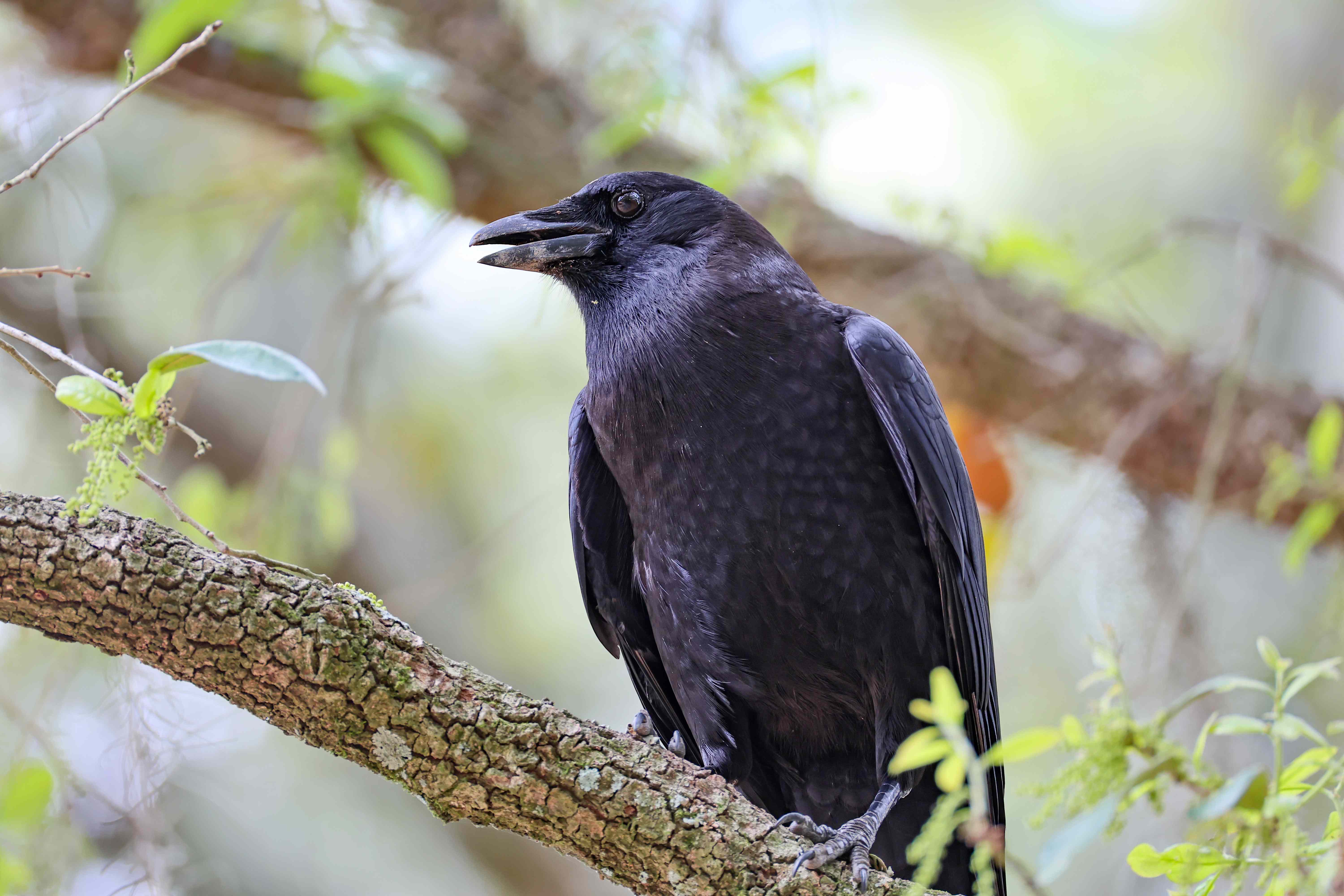
Spotting a few crows in the yard is one thing, but seeing dozens or even hundreds of these dark-feathered birds gathering in the trees can be startling. Their loud calls and coordinated movements might make you wonder whether something is wrong. Though it may be a bit startling, a gathering of crows is usually normal behavior, not a sign of danger.
Crows are highly intelligent, social birds that gather for several reasons, including finding food, communicating with one another, and preparing to roost for the night. Depending on the season, what looks like an unusual swarm may be birds following usual patterns.
Crows May Be Looking For Food
One of the simplest explanations for a gathering of crows is an easy meal. These opportunistic birds eat a varied diet that can include insects, seeds, fruits, nuts, small animals, and carrion. They also readily take advantage of food scraps and other resources around homes.
Your yard may be especially attractive if it has mature trees, a vegetable garden, pet food left outdoors, uncovered trash cans, or a bird feeder stocked with food that crows enjoy. Once one bird discovers a reliable food source, others may follow. Crows are also observant and can learn from their surroundings. Their intelligence and memory can help them return to places where food is readily available.
Crows Could Be Gathering To Roost
If crows begin arriving in large numbers near sunset, they may be preparing to roost. Crows sometimes gather in communal nighttime roosts, where many birds settle in the same general area to spend the night.
Such gatherings are especially noticeable in fall and winter, when crows may travel from different areas to join larger groups. Trees in residential neighborhoods, parks, and other sheltered locations can provide convenient places to settle.
A large gathering doesn’t necessarily mean every bird lives nearby. Some crows travel considerable distances to reach a communal roost, creating a quick influx that can seem to come out of nowhere. If the birds arrive around dusk and leave in the morning, a roost is a likely explanation.
Crows May Be Communicating About A Threat
Crows also gather when they encounter a potential predator or another perceived danger. This behavior, known as mobbing, involves multiple birds calling loudly and sometimes swooping toward a threat, such as an owl, hawk, or cat. Their vocalizations can alert other crows to danger. If you notice birds repeatedly calling, circling one tree, or focusing on the same spot, they may be reacting to a predator or defending a nearby nest.
How To Keep Crows From Taking Over Your Yard
If crows are messing up your garden or raiding your garbage, you may want to think about making your property less appealing. Start by securing trash cans, bringing pet food indoors, cleaning up spilled birdseed, and covering vulnerable garden crops. Avoid intentionally feeding crows, which can encourage bigger gatherings over time.
You can also try visual deterrents, such as reflective objects, although their effectiveness may vary. Because crows are intelligent and adaptable, they may become accustomed to deterrents that remain in the same place. Avoid harming the birds or disturbing active nests. Crows play a role in the ecosystem by eating insects and scavenging carrion, helping clean up their surroundings.
When Should You Be Concerned?
In most cases, a gathering of crows isn’t a cause for concern. However, if you notice an injured bird, an unusual number of dead birds, or signs of illness among multiple birds, contact your local wildlife agency for guidance. Avoid handling sick or dead birds yourself.
Otherwise, consider the gathering an opportunity to observe one of nature’s most fascinating birds. Whether they’re searching for food, protecting each other, or getting ready for the night, crows are simply doing what comes naturally. Their presence may be noisy, but it rarely signals anything sinister.
on Southern Living
Source: Nature



0 Comments